Barrier detection: AI vs community annotatorsPilot, April–May 2026
384messages coded, 32 patients
9language models, zero-shot
κ 0.69two annotators agree
April–May 2026 pilot, 384 messages. The dashed line is κ, how often the two community annotators agree with each other; the dots are macro-F1, how often a model agrees with the reference labels, so the line is a benchmark and not a point on the same measure. † Kimi K2.6 and Nemotron 3 were scored against the post-adjudication gold standard; the other seven against pre-adjudication labels (38 of 384 labels differ).
Connect Wellness is community-governed AI for health communication. It adapts trusted health information into the multi-dialectal Spanish, English and intermixed language families in the Creighton corridor of Phoenix use every day, checks it with medical librarians, clinicians and residents, and sends it by SMS text message. The community that speaks the language decides what the system may say and when it must stop.
En español
Connect Wellness es inteligencia artificial para la comunicación en salud, gobernada por la comunidad. Adapta información de salud confiable al español de distintos dialectos, al inglés y a la mezcla de ambos que usan a diario las familias del corredor de Creighton, en Phoenix, la verifica con bibliotecarios médicos, profesionales clínicos y residentes, y la envía por mensaje de texto. La comunidad que habla el idioma decide qué puede decir el sistema y cuándo debe detenerse.
The people who speak the language should govern it.
Community data sovereignty, in the spirit of the CARE Principles and the Data is Soil playbook: the people whose words become data decide what is kept close, shared or left alone.
8,500+ households reached by text message
Serving the Creighton corridor since 2013
Developed with partners including Arizona State University, the University of Arizona College of Medicine, Banner University Medical Center, Phoenix Children's Hospital, Unite Us, Vitalyst Health Foundation, Dignity Health, NIH AIM-AHEAD, UCLA CERP and many others.
The stack
How it works, in four lines
01Household language.
02Community-governed meaning.
03Verified knowledge.
04Institutions that answer.
Does AI understand how this community talks about health?
Not yet, and the problem is language.
Families in the Creighton corridor trust the text line they use for food boxes and SNAP. Of 7,976 inbound messages we analyzed, 20 asked about managing diet for a diagnosed condition. The food reaches families; the knowledge to manage a diagnosis has not.
In an April–May 2026 pilot, two community annotators coded 384 messages from 32 patients for health barriers, and nine large language models read the same messages. The annotators agreed with each other far more often than any model agreed with them. Most models scored under 0.5 macro-F1, a measure that weights rare barriers as heavily as common ones.
People imply the rare barriers more often than they state them.
The accuracy trapEvery 100 pilot messages
About 83 in 100: no barrier (outlined)
About 17 in 100: carries a barrier (filled)
A model that always says "no barrier" gets these 83 right and finds none of these 17.
That is why the chart at the top of this page scores models by macro-F1.
Implied barriers: detected by N of 9 modelsF1 above 0
Clinical confusionDetected by 2 of 9 models
Gold-standard support: 0 to 2 messages.
"My doctor told me something different"
Trust and engagementDetected by 2 of 9 models
Gold-standard support: 0 to 1 message.
Silence. A one-word reply. "Stop."
April–May 2026 pilot. With so few gold examples, these counts show which models noticed the category at all, not how well. Medication cost had no gold examples and is not shown.
What happens when health systems cannot hear community language?
Clinical screening questionnaires ask what institutions decided to ask. When a family stops trusting the system, no form field records it, and the family drops out of care.
Agencies under load are adopting AI navigation tools that often miss the meaning behind people's words. A tool that misreads the people it serves widens the gap it was bought to close. AI in community health should make community health workers more capable and never replace them. Authority over the tools belongs to the people who do the work and live in the neighborhood.
What is Construction Grammar, and why not just fine-tune a model?
Construction Grammar describes a language as learned pairings of form and meaning, from single words to whole phrase patterns.
One phrase, two readingsIllustration
Read word by word, the Spanish phrase "Piden muchos requisitos" is "they ask", "many", "requirements", which adds up to a logistics complaint. Read as one phrase with the community library, it means "this system is filtering me out", an eligibility barrier.
Whole phrase, read with the community library
"This system is filtering me out." An eligibility barrier.
Pidenthey ask
muchosmany
requisitosrequirements
Word by word
A logistics complaint.
How a word-by-word reader and the community library read the same phrase. Both readings are drawn as an illustration; no model output is shown.
We fine-tuned open models on this community's own messages, and none performed acceptably. A fine-tuned model spreads what it learns across millions of numbers no resident can read or fix. A construction is a written record a person can read and correct, and recent research has shown such grammars can be learned from annotated text at scale and stay readable.
So we keep meaning outside the model, in the community phrase-meaning library. The machine proposes entries, the people who speak the language decide which are right, and the library carries over to each new model generation. A standard retrieval-augmented system matches a message's words to documents; the language layer first decides what the message means here, then retrieves, shapes the prompt or routes to a person.
Language layerMessage to response
Process
Model
Person
Library
Incoming message
Phrase-meaning recognizer
Matched meaning
Retrieval, prompt augmentation or routing
Generative model or human (routing decides)
Response
Trust check-in
Library review (approved entries go to the phrase-meaning library, which the recognizer reads)
What do community phrases actually mean?
Four library entries from the pilot, adjudicated by community annotators. Council approval is designed.
"Piden muchos requisitos"
Surface reading
A logistics complaint.
Meaning
The system is filtering her out. An eligibility and documentation barrier, often with fear behind it.
System response
Route to a community health worker. Never answer with another form.
"I couldn't get veggies before"
Surface reading
A remark about groceries.
Meaning
Food insecurity.
System response
Open the food access path and check what else is missing.
"My doctor told me something different"
Surface reading
A disagreement.
Meaning
Clinical confusion about a diagnosis, a medication or a referral.
System response
Flag for clinical follow-up. Never explain the medicine by text.
Silence. A one-word reply. "Stop."
Surface reading
No barrier.
Meaning
Trust withdrawn.
System response
A person reaches out. No automated nudge.
We test tone, framing and timing with residents. After an exchange, a check-in is designed to ask whether it helped (helped, somewhat or no), and the answers will go to the library and the council.
One phrase, three frames
What does "food insecurity" mean, and to whom?
Agency
A measurable condition, counted with a screening question.
Clinic
A social determinant of health, recorded in the chart.
Household
A matter of dignity, and a reason people hesitate to ask.
All three are true, and none stands in for another. The library keeps facts, phrases, lived experience and community values as separate kinds of record, so one resident's voice is never published as the community's consensus.
How does trusted health information reach the right people by text message?
Public reference health information is typically written at or above a ninth-grade reading level and built for a web browser. The community's own messages show the reading level, vocabulary and length people use, and six steps bring a trusted passage to that level.
Knowledge pipelineSource to text message, 6 steps
Step 1
Medical librarians, researchers or doctors curate the source from a trusted public reference and record where it came from.
Step 2
The passage is atomized into units that each fit one text message and keep a link to the source.
Step 3
The community shapes it to its own reading level, vocabulary and length, with framing from the phrase-meaning library.
Four gates check it, in sequence: source quality, community communication review, nutritional accuracy, and clinical safety when the topic calls for it; a unit that misses community review goes back for re-adaptation.
Gate 1Source quality.
Gate 2Community communication review. Misses it: back to step 3 for re-adaptation.
Gate 3Nutritional accuracy.
Gate 4Clinical safety When the topic calls for it.
Step 5
It goes out where people already are, by text in Spanish or English, in the channel families use for food.
Creighton Community Foundation
Text message
Calabacitas, nopales y chayote casi no suben el azucar. Cook them with onion and tomato and fill half your plate. Rice or tortilla goes on the side.
Las tortillas de maiz son grano entero y tienen mas fibra que las de harina. Corn tortillas con frijoles y verdura make a good, filling meal.
Two example units, written to show the format. Each fits one text message.
Step 6
Living curation keeps it current: we will review sources quarterly on a library platform and send changed units back through the gates.
Source changes: back to step 2
Step
Gate, in sequence
Language layer
The system never gives dosing, a diagnosis or individualized medical advice. Medication and symptom questions go to a provider.
Pending funding, building with the ASU Library Health Sciences Division, a member of the Network of the National Library of Medicine, Region 5.
The community is designed to decide. Connect Wellness is built as community-based participatory research (CBPR) and youth participatory action research (YPAR), with residents, youth and community health workers as co-researchers.
Who decides whatThe council, as designed
A paid, community-majority council
VotesVotes: Residents, community health workers
AdvisesAdvises: Staff, academics
Steps with an orange edge are council decisions.
Meaning what a phrase means
Residents and community health workers teach a phrase
The contributor confirms the entry
The council will approve every entry
The entry enters the library
Permission whether a model may act on it
Each week the council will review what the system caught and missed
▶Go a model may message families
■Stop the model must stop
What a phrase means and whether an AI system may act on it are separate decisions. Community members will hold the votes on both.
How residents will teach the library
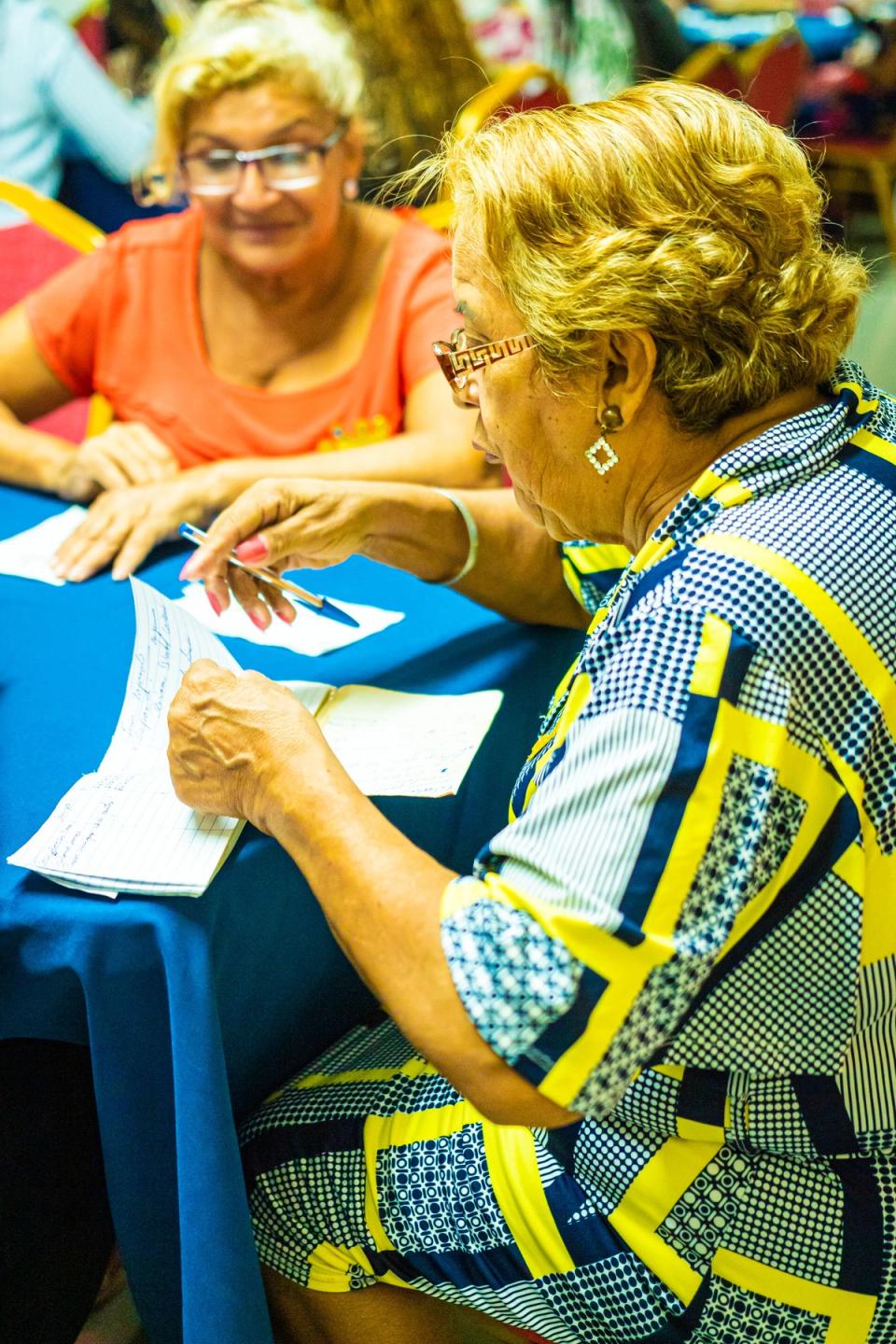
Residents and community health workers will teach the library in ordinary conversation, with stories, examples and corrections. Contributors will be attributed for their entries and paid for the work.
Both pilot annotators are community members, and one is also research-trained. On hard cases, the annotator without research training deferred to the one with it. The codebook did not account for that power dynamic; a council where community members hold the votes is this design's correction.
Disagreements on the record
Two annotators code every message, and hard cases are designed to go into a registry. We report where the community's categories differ from standard clinical screeners.
Findings go back to participants
Through the same text line, in Spanish and English.
Illustration of the design. Not a pilot conversation.
Step 1 of 4. A resident writes:Resident
"Around here, asking for help can feel like admitting you failed your family."
Step 2 of 4. The system asks:System
Is this your own experience, something you see around you, or something handed down?
My own experience
Something I see around me
Something handed down
Step 3 of 4. The system drafts a library entry, and the contributor edits, confirms or throws it out:Proposed entry
Form
"asking for help can feel like admitting you failed your family"
Meaning
Drafted by the system for the contributor to edit
Context
The contributor's answer to the question above
Edit
Confirm
Throw out
Step 4 of 4. Goes to the council for a decision
How does community voice become evidence?
About 26,000 messages a year come through our community text line. Read together, they say what households need, what is changing, and where the systems around them fall short.
Community voice rises.
Frameworks that help health systems understand community obstacles and needs are informed differently, and become better. Issues driven by economic or socio-political forces surface sooner: the loss of SNAP benefits from new enrollment processing surfaces now, rather than after 200,000 people have lost food support.
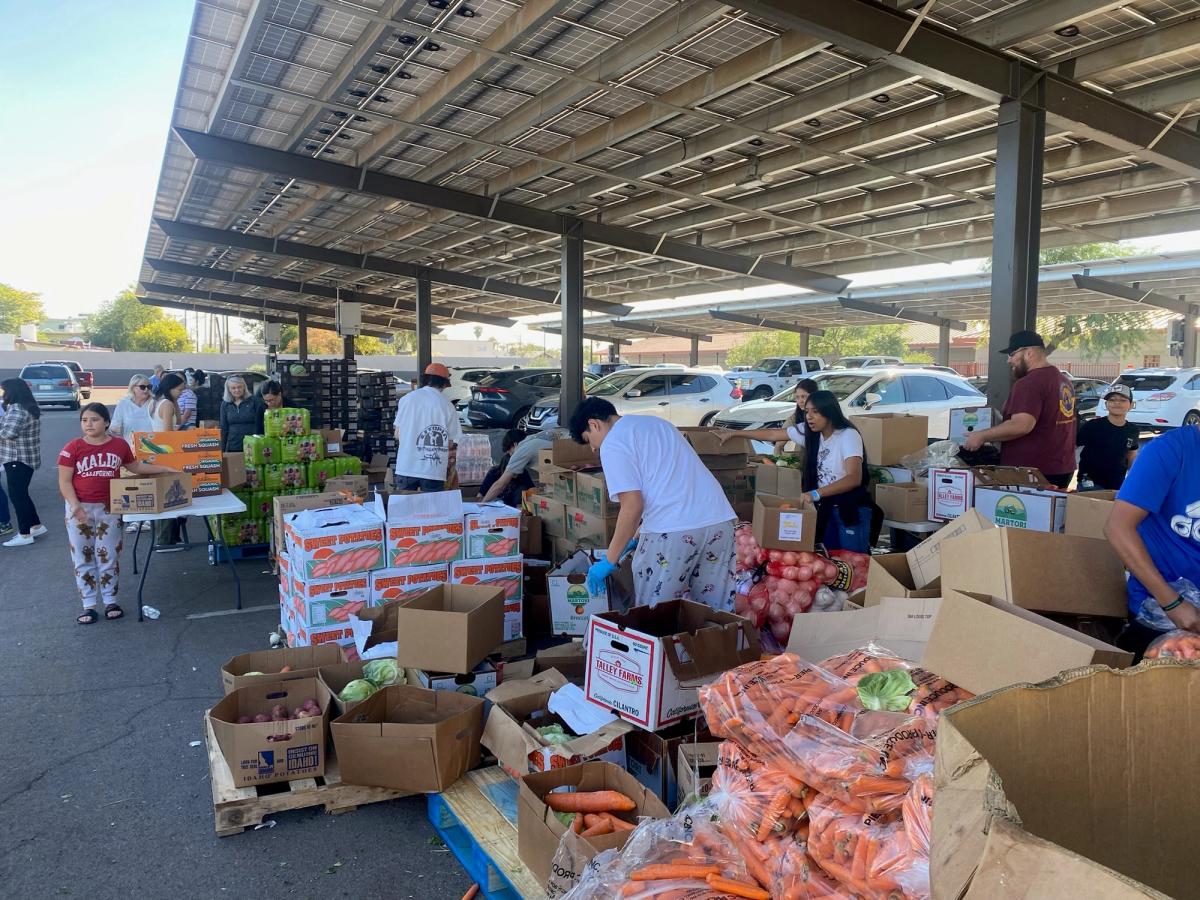
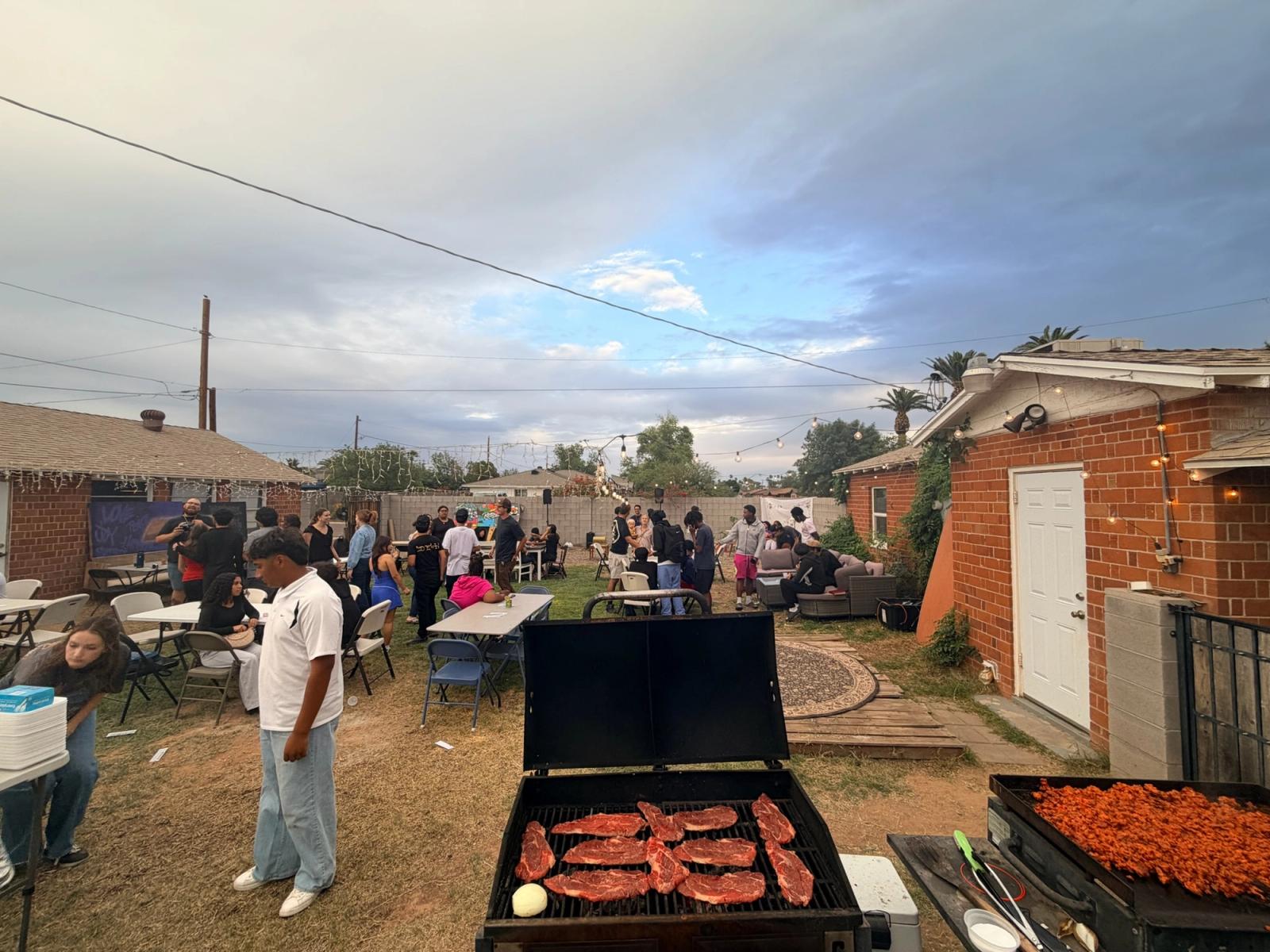
A neighborhood cookout.
Answer on the recordAs designed
Household messagesAbout 26,000 a year on the community text line
Read together as evidenceWhat households need, what is changing, where systems fall short
A clinic or agency answers on the recordOne of four answers, each with its reason
Explore
Modify
Defer
Decline
Findings return to householdsOn the same text line, in Spanish and English
Then the loop starts again with new household messages.
Every answer is designed to leave a record with its reason, a decline included.
When the community speaks, institutions answer on the record.
What is Connect Wellness building next?
This section describes work in progress; none of it is a finished system yet.
We are building the community phrase-meaning library and the teaching mechanism first. The knowledge graph sits underneath them and connects each entry to the people, places, institutions and services it refers to.
Two goals shape the design from the start. Another community should be able to run its own library, under its own permissions. And any AI application, in education, health care, human services or civic life, should be able to consult the language layer through an interface that works with any model.
Giving an AI system the community's interpretation does not guarantee that it will follow it. That is why the four gates and the council's go and stop authority exist.
When a message carries a barrier, its context should reach the clinical record as a referral a clinician can act on, and we are building the instrument that scores whether it did.
What any application gets backFrom the interpretation service
Construction
The phrase pattern the message matched.
Meaning
What it means in this community.
Context
Who says it, to whom and when.
Confidence
How sure the community is, including where people disagree.
Validated by
Who checked the entry, and when.
Restrictions
Any limit on how an application may use it.
Help build the path from community evidence to policy.
About 26,000messages a year through the community text channel
9,000referral closures a year from medical partners
2013the year CCF began serving the Creighton corridor
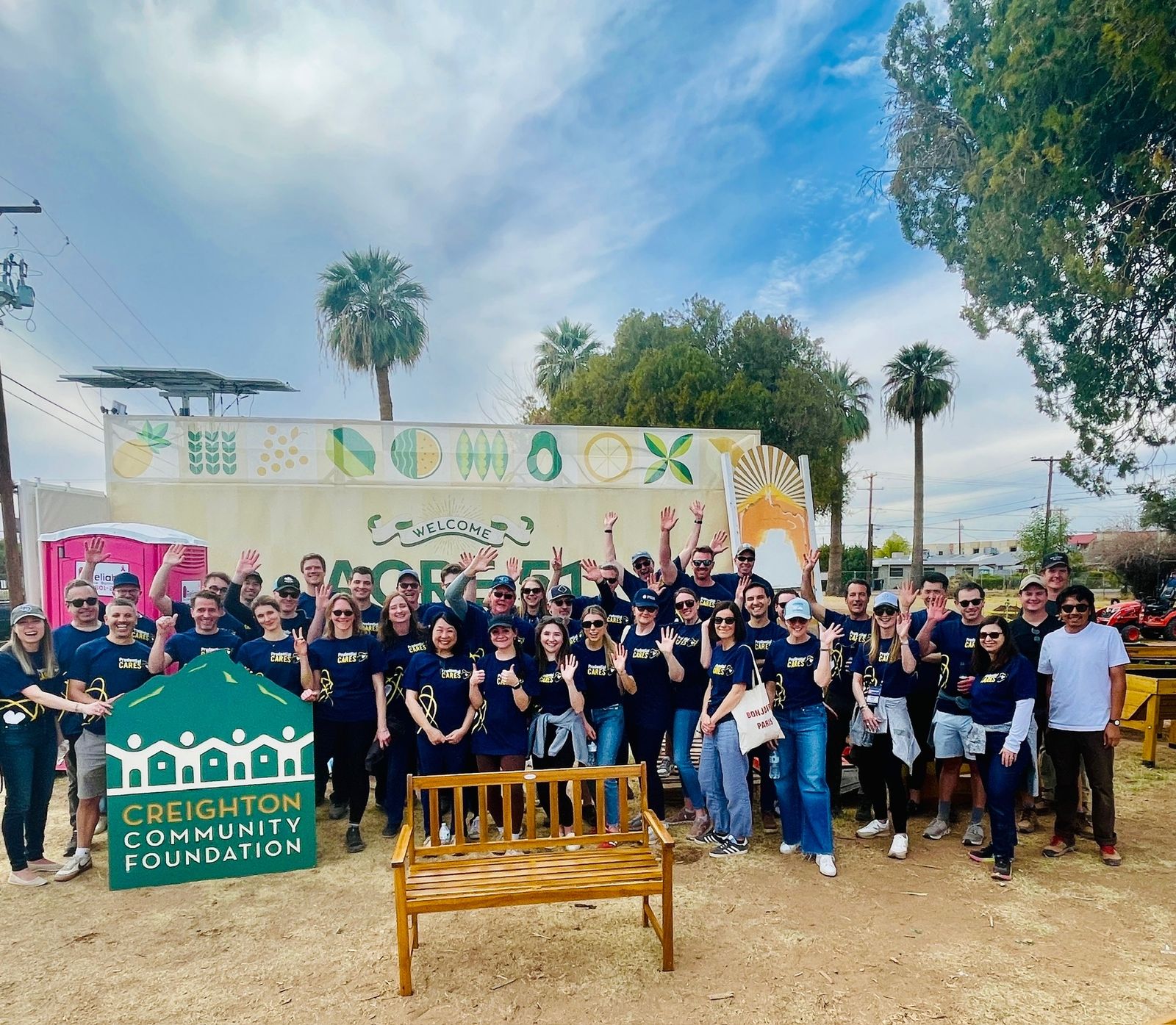
Volunteers at a community garden workday.
Who is behind Connect Wellness?
A community organization that already has the text platform, the consented messages and the relationships, with partners who hold the work to a research standard.
Community.
Creighton Community Foundation, in the corridor since 2013, and a team of community health workers who live in the neighborhood.
Academic.
Arizona State University College of Health Solutions; ASU Linguistics, Construction Grammar; ASU nutritional epidemiology.
Library.
ASU Library Health Sciences Division, a member of the Network of the National Library of Medicine, Region 5.
Clinical.
Banner University Medical Center; University of Arizona College of Medicine Phoenix.
Research network.
UCLA, and a national NIH-supported AI research consortium in which CCF is a community partner.
Technology.
MessageEverywhere, the MIT-licensed messaging platform CCF built with an open developer community.
Workforce.
An HRSA community health worker apprenticeship partnership.
Partner with us
Funders, health systems and governments can bring a population, a clinic or a program. Technologists can build on the MIT-licensed platform. Community members can ask about a council seat. Email the team and a person replies.
Can a community author the semantic infrastructure through which AI understands it?
FAQ
What is community-governed AI for health communication?
Community-governed AI for health communication adapts and delivers health information in the language a community uses, with the community deciding what the system may say and when it must stop. At Connect Wellness that authority is designed to sit with a paid, community-majority council of residents and community health workers.
Does Connect Wellness replace community health workers?
No. The system helps community health workers spot needs sooner and get people to them faster, and the workers are designed to govern the tools. A message that carries fear, confusion or withdrawn trust goes to a person.
What is Construction Grammar and how does it help AI understand a community?
Construction Grammar treats language as pairs of form and meaning. A community phrase-meaning library records how this community expresses need, fear and trust in multi-dialectal Spanish, English and intermixed language, so a system can recognize the meaning behind the words.
Why not just fine-tune a language model on community messages?
We tried. Fine-tuned open models did not perform acceptably on this community's language, and nobody in the neighborhood can inspect or correct a fine-tuned model. Residents can audit and extend a library that sits outside the model, and it carries over when models change.
How does trusted health information get adapted for text messages without losing accuracy?
Medical librarians, researchers or doctors curate the source. We cut the passage into a text-sized unit that keeps its link to the source, reword it in community language, and check it at four gates: source quality, community communication, nutritional accuracy and clinical safety.
Who decides when an AI system is allowed to message families?
The community council is designed to decide. Each week it will review what the system caught and missed, approve library entries, and decide when a model may message families and when it must stop.
How is participant data protected?
Messages are collected with participant consent during routine operations; the corpus is de-identified; research use runs under an IRB of record (ASU). Names, phone numbers and other identifying details never appear in published examples.
How can an organization partner with, fund or build on Connect Wellness?
Email the team at [email protected]. Funders and health systems can bring a population or a program. Technologists can build on the MIT-licensed platform. Donors can fund community council seats directly.